What Chance Will America’s Youth Have In A Changing Global Economy?

17 Apr
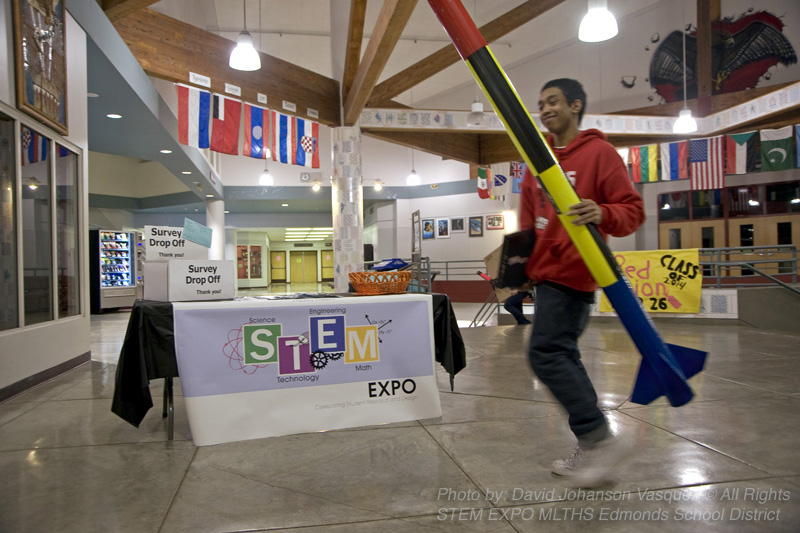
The first STEM EXPO Fair held at Edmonds School District's new STEM Magnet School at MountLake Terrace HS in Washington State. The student is caring a rocket, which was used in a group presentation at the fair.

The first STEM EXPO Fair held at Edmonds School District’s new STEM Magnet School at       MountLake Terrace HS in Washington State. This rocket club student is caring a rocket, which was used earlier in a group presentation at the fair.

Multimedia essay by: David Johanson Vasquez © All Rights

A big question asked by concerned people and industry leaders across the Nation is waiting for an answer… How will current and future generations stay competitive in an increasingly, complex, global economy? A high-performance education program involving a blend of Science, Technology, Engineering and Mathematics (STEM) — is promising solutions as it’s building momentum within post-secondary and kindergarten-through-grade 12 (K-12) education. 

STEM Robotics team project is demonstrated for an enthusiastic audience of all ages.

STEM Robotics team project is demonstrated for an enthusiastic audience of all ages.

The dynamic learning created from STEM’s project based curriculum is contagious for a growing number of students. And the program’s appeal is spreading to parents, schools and corporate sponsors who are looking for ways to get involved in supporting technology learning through public education. Even the U.S. Congress solidly supports the critical initiatives driving STEM Education, which is mostly funded through the National Science Foundation (NSF.)

STEM Robotics team in action with their project

Enthusiasm and excitement was experienced by those viewing students’ technology project presentations.

A Basic Overview Of A STEM Magnet Program

By the 21st century, digital technology had transformed global industry and commerce by accelerating STEM related industries. The skill-sets, training and knowledge of entry-level applicants was falling behind. Standards for learning, used in our public educational system, were now becoming outdated. Nationally, educators needed a new, comprehensive learning approach to inspire, explore and motivate students’ achievement in the global dynamics of STEM. Today, the Nation’s public schools place greater emphasis on introducing STEM related content to both teachers and students starting as early as grade school. This program strategy allows all students of varied backgrounds, ethnicities and socio-economic levels to gain access to learning projects associated with science and technology. By presenting young students with thoughtful STEM lesson plans, they are more likely to engage in the discovery process of even the most technical subject matters. Entering middle school, students are learning accelerated levels of science and technology content, which helps them decide if they wish to enroll in a high school, offering a focused curriculum. The STEM Magnet Program pulls in a diversified population of students, engaged and motivated by their earlier learning experiences.

STEM_Fair_ESD_BPP_aq_68

 Evolution And Development Of STEM Education

Richard Blais, Chairman of the technology department for Shenendehowa Central School District in Upstate New York, developed a curriculum in 1986, to support students’ interest in studying engineering. To enable enthusiasm and confidence in students, core courses included; pre-engineering and digital electronics, infused with energetic and interactive learning environments. The curriculum’s proven a success, attracted philanthropist, Richard Liebich, who partnered with Blais to set up, Project Lead the Way (PLTW.) 

Greg Schwab - Principal, Mountlake Terrace High School, greets students at the STEM EXPO Fair

Greg Schwab – Principal, Mountlake Terrace High School, greets students at the STEM EXPO Fair

Dr. Nick Brossoit Superintendent, Edmonds School District

Dr. Nick Brossoit Superintendent, Edmonds School District

Within 10 years of PLTW’s founding, a dozen high schools in New York State adopted the program. Within the next few years high schools in 30 states were using PLTW’sPathway to Engineering Program.” Soon after, PLTW was a major national program, which used innovative activities of project and problem-based assignments. Further adding to PLTW’s momentum and success was the enthusiastic support corporations showed by endorsing and contributing financial resources towards the program.  

Mark Madison  Director, Career & Technical Education

Mark Madison
Director, Career & Technical Education for Edmonds SD

STEM Education incorporated many successful PLTW learning strategies and programs. PLTW is still active in high schools today and plays an active role in STEM Education.  

STEM EXPO Keynote Speaker - Dr. Elaine Scott Director of Science & Technology Program UW Bothell

STEM EXPO Keynote Speaker – Dr. Elaine Scott Director of Science & Technology Program UW Bothell 

Mark Sanders’, 2009 STEMmania article in The Technology Teacher, cites the STEM acronym first being used in the 1990’s. The National Science Foundation (NSF) started using “SMET” as a reference for “science, mathematics, engineering and technology.” A department program officer complained “SMET” sounded similar to “smut,” so “STEM” became the suitable replacement. It would take more than a decade for the public to recognized STEM’s referenced meaning.  

The support  and enthusiasm for STEM Education is displayed by an impressive turnout for the District's first STEM EXPO Fair.

The support and enthusiasm for STEM Education is displayed by an impressive turnout for the District’s first STEM EXPO Fair.

STEM_Fair_ESD_BPP_77_1 STEM_Fair_ESD_BPP_74 STEM_Multi_Tshirt_-E101

The Challenge Of Integrative Education: Transcending Barriers And Perceived Domains Found Within Science, Technology, Engineering and Mathematic Education

Perhaps the greatest test for a STEM Magnet Program will involve achieving the goal of course/subject integration. As a career, technical and education (CTE) instructor, I’ve heard this complaint more than any other from students — “why do I have to learn this subject, it doesn’t relate to other things I’m learning or anything I’ll ever need to know!?” In truth, all subjects and courses taught in school share dynamic connections, we as educators need to do more in helping students see their associations.    STEM_Fair_ESD_BPP_ae_24 Core sciences and engineering education have traditionally maintained strict disciplinary lines. This shortsighted disconnect is generally not found in industry, where the imperative is to find solutions which will “payoff” in the shortest amount of time. Industry’s necessity to cut through process for realizing greater profits is an important lesson plan for all STEM Programs. The realized profit for a student is — being taught how to quickly adapt new comprehensive and sometimes-unconventional learning strategies to gain a competitive advantage.  STEM_Fair_ESD_BPP_ae_18

STEM Expo Robotics team takes a break from their demonstration for a group photo. Teamwork builds confidence and trust in the students themselves as well as other team members.

STEM Expo Robotics team takes a break from their demonstration for a group photo. Teamwork builds confidence and trust in the students themselves as well as other team members.

Benefits/Advantages For Both Students And The Schools They Attend

Developing a STEM magnet program helps a school district align its resources towards assisting students preparing for college and universities, which specialize in related technical studies. An additional advantage the program offers a student pursuing a post secondary education is — an institution will more likely accept the applicant’s enrollment request based on the knowledge and technical skills achieved through a STEM Magnet Program.   


STEM_Fair_ESD_BPP_87   STEM_Fair_ESD_BPP_ac_23   U.S. industries have increasingly cited the lack of qualified technical applicants they need as a reason not to hire more employees. The shortage of people with necessary STEM skills has motivated corporations to contribute their resources of funding, mentoring and sponsorship towards public education’s technology learning programs.

STEM_Fair_ESD_BPP_ah_6  

Community exhibitors at the STEM EXPO Fair include corporate sponsors of STEM education.

Community exhibitors at the STEM EXPO Fair include corporate sponsors of STEM education.


STEM_Fair_ESD_BPP_ac_35

Aerospace giant Boeing is a big sponsor of the STEM Magnet Program.

Aerospace giant Boeing is a big sponsor of the STEM Magnet Program.

STEM_Fair_ESD_BPP_104

STEM_Fair_ESD_BPP_1

Parents and community groups have eagerly supported STEM programs. Student’s parents are critical stakeholders who quickly realized the impact the program was having  — seeing impressive scholastic and attitude improvements with their children.

STEM_Fair_ESD_BPP_ae_17

STEM_Fair_ESD_BPP_ac_1

STEM Education Uses Progressive Learning Strategies To Develop Critical Learning And Self-Discipline Within a Student 

STEM_Fair_ESD_BPP_ad_7

STEM Education attempts to accelerate student development by modifying the standard teacher-centered classroom with more independent learning. The curriculum encourages project-based learning, problem solving and discovery, which empower the students to engage their cognitive skills to find solutions. This form of learning develops greater self-confidence in students and it opens channels among the students themselves to interact thru peer-to-peer learning. These spontaneous collaborative activities are self-organized learning events and they naturally promote leadership within the group. It has been well documented, knowledge transferred from experience in peer-to-peer activities are highly successful forms of learning.

Students enrolled in STEM Programs are encouraged to engage and connect with others by refining their presentation skills.

Students enrolled in STEM Programs are encouraged to engage and connect with others by refining their presentation skills.

STEM_Fair_ESD_BPP_ab_15

  STEM_Fair_ESD_BPP_am_39 STEM_Fair_ESD_BPP_ac_20

Tangible Returns In Personal Development Through Teamwork And Leadership

Over the past five years I’ve had the opportunity to teach in a variety of classroom environments using a CTE curriculum. It’s remarkable seeing how engaged students are with learning their STEM subject matter. These same students are much more likely to openly contribute and share their ideas in a classroom discussion using the critical thinking skills they’ve learned to develop. Most often, STEM classes are more like being in a college environment, requiring a minimum amount of classroom management, as the students are self-motivated to complete their assignments and move on to the next project. Generally the level of leadership development and volunteerism is noticeably higher in STEM classes due to the programs emphasis on teamwork, self-confidence and academic achievement. These personal development qualities are valuable assets for students applying for college admission and later — when entering the career of their choice.

Craig DeVine - pre-engineering instructor, talks with his students near a 3-D printer

Craig DeVine – pre-engineering instructor, talks with his students near a 3-D printer

STEM_Fair_ESD_BPP_a3  

STEM_Fair_ESD_BPP_ad_15

Improving Forecast For Employment Opportunities Using STEM Education

As STEM Magnet Schools continue to place their graduates into secondary education, followed by the students successful careers in STEM related industries — STEM Education will help transform the American education landscape. If STEM Education can sustain its momentum, the future horizon looks bright for our youth to achieve economic opportunities on a global leveled playing field.   STEM_Fair_ESD_BPP_91 STEM_Fair_ESD_BPP_1 STEM_Fair_ESD_BPP_ae_12_1

Entrance to Mountlake Terrace High School -Edmonds School District's first STEM Magnet School

Entrance to Mountlake Terrace High School -Edmonds School District’s first STEM Magnet School

.

. . . . . .. .STEM_Fair_ESD_BPP_ad_18 . . ……..

STEM Education Terms & Definitions

CTE = Career Technical Education NSF – National Science Foundation PD&I = pedagogy referring to – purposeful design and inquiry PLTW = Project Lead The Way STEM = Science, Technology, Engineering & Mathematics  STEM Magnet School = A school with a concentration of STEM classes, which attracts students throughout a school district interested in enrolling in a STEM Program   STEM_Fair_ESD_BPP_ae_5

STEM Education Links

http://www.stemedcoalition.org/ Home The Future of Education / The history of STEM education in America. Handy infographic! What is STEM Education? PLTW | OUR HISTORY PLTW | STEM Education Curriculum for Middle and High Schools http://esdstem.pbworks.com/f/TTT%2BSTEM%2BArticle_1.pdf Home PBS Teachers | STEM Education Resource Center nsf.gov – National Science Foundation – US National Science Foundation (NSF) Siemens STEM Academy – STEM Education Has Arrived… Start Small, But Dream Big http://www.stemeducation.com/ STEM Resources | Early STEM Program Still Going Strong – STEM Education (usnews.com) What STEM Is–and Why We Care – STEM Education (usnews.com) https://education.uky.edu/STEM/sites/education.uky.edu.STEM/files/SEM%20604_syllabus_%20History%20of%20STEM%20Ed.pdf Historical Perspectives on STEM Education in Arkansas | Arkansas STEM Coalition http://www.fas.org/sgp/crs/misc/R42642.pdf STEM ES Home – STEM ES FAQs NSTA :: News Story

Reflections From A Future Hawaii: Can A Tropical Paradise Become A Portal To Deep Space?

28 Feb

Honolulu, Hawaii 2054: Launch gateway to L4 & L5 space stations, Tranquility Moon Base and the Mars Frontier.

Honolulu, Hawaii 2054: Launch gateway to L4 & L5 space stations, L2 Lunar Hub and the Mars Frontier. Illuminated aircraft and monorail tubes bring early commuters into the City as twilight transitions to dawn. 

Multimedia essay by: David Johanson Vasquez © All  Rights

Waikiki, on Hawaii’s Island of Oahu is a Cross Roads of the World. The allure of this tropical city attracts millions of vacationing pilgrims from across the globe. Steady infusion of foreign and domestic investment creates a dynamic and often futuristic looking metropolis.

Digital display at the Galleria.

Digital display at the Galleria.

  On my last visit to Waikiki in November, I came across an ultramodern, duty-free, fashion and clothing store  located on its main boulevard. Entering this multiplex shopping site felt like being on the sci-fi movie sets for Spielberg’s Minority Report or  Ridely Scott’s Blade Runner. My son-in-law commented as he left the “Galleria” — “it was a sensory overload experience,” and headed back to the hotel to sleep it off. Hawa_Futr_BPP_121116_a38 . .

Portal entry to Waikiki's Galleria.

A hall portal entry to Waikiki’s Galleria.

Entering the Galleria is exciting and dynamic for those who are ready  for a hyper-sensory encounter while shopping for fashion and cosmetics products.

Honolulu’s Dynamic Style of Architecture

Honolulu encompasses Waikikik and has a rich, vibrant range of architectural styles, including its own unique “Hawaiian Architectural Style. Within Waikiki, the new architecture blends modern and Japanese style. 

Modern Hawaiian architectural style.

Modern Hawaiian architectural style.

Honolulu skyline with natural vegetation in foreground.

Honolulu skyline with natural vegetation in foreground.

From our condo balcony we could see a night panorama of Honolulu, which inspired  this essay’s theme of — a reflections from a future Hawaii. 

Waikiki_Pano_BPP_ewp_44

.      

Massive walls of electronic  projection frame the entry environment in Waikiki's Galleria.

Massive walls of electronic projection frame the entry environment in Waikiki’s Galleria.

The Sky Is No Longer The Limit For Digital Displays

Contemporary marketing and advertising have embraced electronics LED’s to capture our attention and stimulate our senses. We can expect the future will sustain sensory overload for the marketing of products, services and ideas on a global scale.     


Multimedia environments are more common in the 21st Century. As natural environments are increasingly altered or replaced by new ones, projections of “paradise lost” will attempt to fill an expanding void.

Honolulu skyline with natural vegetation in foreground.

Honolulu panorama

.

.

A Scenario For Things To Come

Advances in artificial intelligence [AI] and remote-control technology continues expanding its role in automating transportation industries. Seamless, point-A-t0-point-B travel provided by autopilot features in ground and air transportation standard— World travel  becomes even more assessable and affordable. 

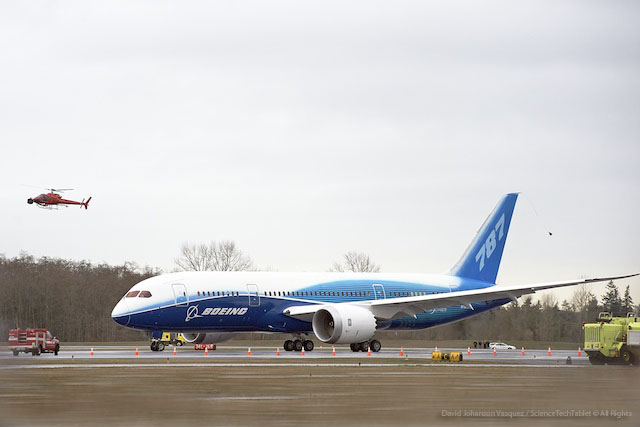
A futuristic Boeing pilotless passenger jet with personal projection systems ( PPS).

A futuristic Boeing pilotless passenger jet with personal projection systems ( PPS).

Both Work and play  amenities can be extended to just about any  cabin environment for an enhanced travel experience.

i

South Point (Ka Lae) – Naalehu, Big Island, Hawaii +18° 54′ 39.96″, -155° 40′ 52.00″ “The Pan Pacific Launch Site” — Gateway To Lunar And Deep Space Exploration

As international space exploration matures, greater consortiums and partnerships develop between countries and corporations to create  space operations staging points near Earth’s orbit.

NASA Illustration of Lagrange Ponts of Earth-Sun System (not proportion to scale)

NASA Illustration of Lagrange Ponts of Earth-Sun System (not proportioned to scale)

The Lagrangian Points: of L2, L4 and L5 are  locations relatively close to Earth, which provide stable orbits for building hubs to assist in lunar, deep-space and asteroid exploratory missions. 


Photo courtesy of NASA.

Photo courtesy of NASA.

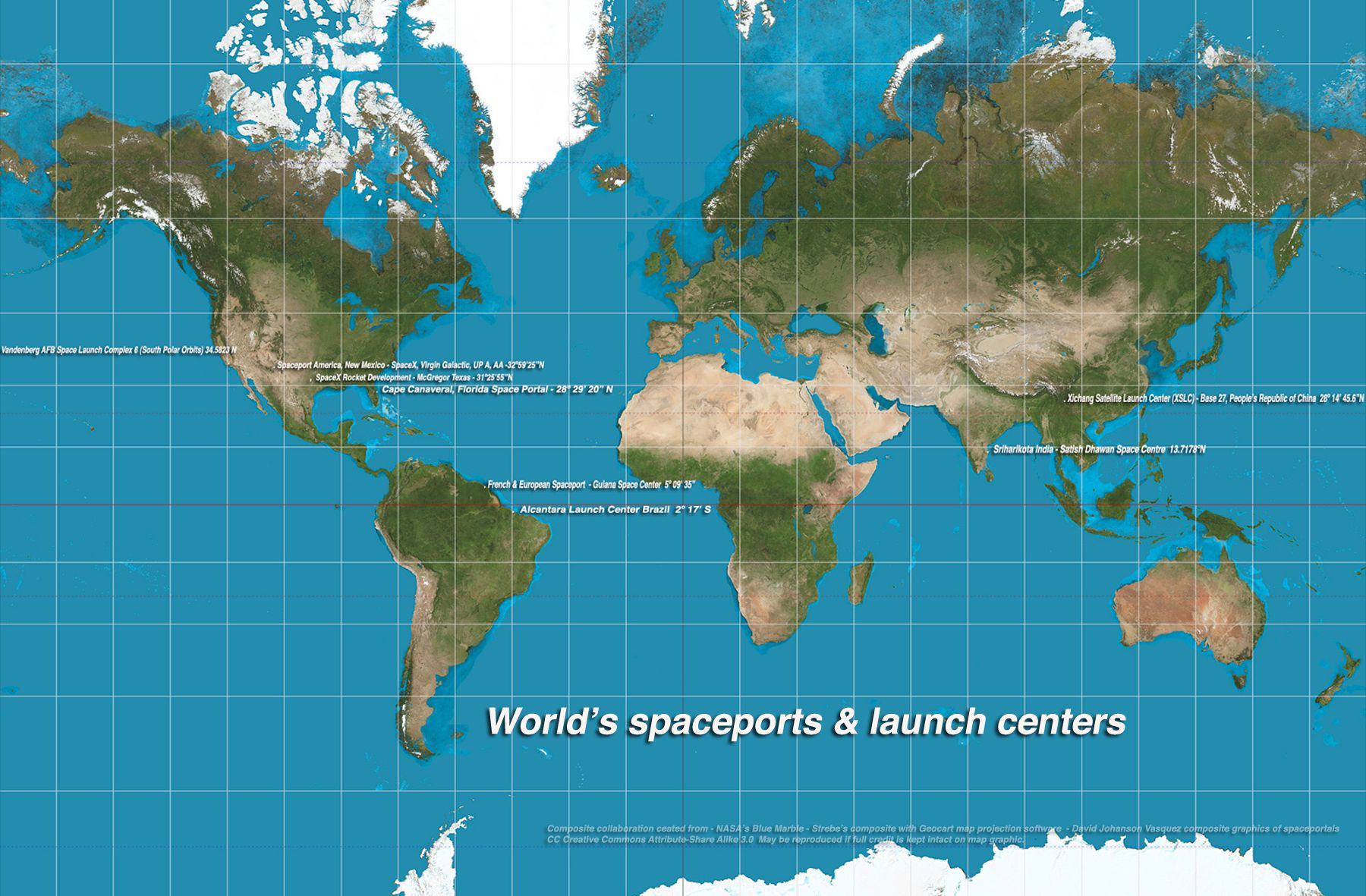
The Big Island of Hawaii's South Point ( Ka Lae) is in the neighborhood of 1,400 miles from the  Equator,  which requires less fuel for launching rockets into orbit.

The Big Island of Hawaii’s South Point ( Ka Lae) is in the neighborhood of 1,400 miles from the Equator, which requires less fuel for launching rockets into orbit.  On the right, a SpaceX rocket has lifted off from the Pan Pacific Launch Site, on its journey to an international L2 Lunar Hub – Photo illustration: David Johanson Vasquez © 

Rocket view looking back towards Hawaii's Pan Pacific Launch Site.

Space view looking back towards Hawaii’s Pan Pacific Launch Site. Photo by: David Johanson Vasquez ©

Locations of previous NASA Apollo Manned landing sites. Photo illustration courtesy of NASA.

Locations of previous NASA Apollo Manned landing sites. Photo illustration courtesy of NASA.

Section view of International L2 Lunar Hub in stable platform orbit. Prime contracting consortium: Boeing, Mitsubishi HI, AviChina, Hindustan Aeronautics and ST Engineering.  — Photo illustration: David Johanson Vasquez ©

Section view of International L2 Lunar Hub in stable platform orbit. Prime contracting consortium: Boeing, Mitsubishi HI, AviChina, Hindustan Aeronautics and ST Engineering. — Photo illustration: David Johanson Vasquez ©

"Asteroid 1" - artist concept of asteroid mining mission to an Earth approaching asteroid.NASA sponsored a study on space manufacturing held at Ames Research Center (ARC) June1977, commissioned painting by - Denise Watt.

Asteroid 1″ – artist concept of asteroid mining mission to an Earth approaching asteroid.
NASA sponsored a study on space manufacturing held at Ames Research Center (ARC) June 1977, commissioned painting by – Denise Watt.

Digital post cards from the Martian Frontier.— Photo illustration: David Johanson Vasquez ©

Digital post cards from the Martian Frontier.
— Photo illustration: David Johanson Vasquez ©

Digital post cards from Mars - mining operations on the "Red Planet."  — Photo illustration: David Johanson Vasquez © All Rights.

Digital post cards from the Martian Frontier – mining operations during a “Red Planet”sunset. — Photo illustration: David Johanson Vasquez © All Rights.

.

.

Will the Last People Remaining In America, Turn the Lights Back On?

19 Dec Will the Last People Remaining In America, Turn  the Lights Back On?

Silhoute_man_ocean_BPP_1Eg227

Multimedia essay & images by: David Johanson Vasquez © All Rights Reserved

Part 1 & 2 of the series

To fully appreciate this story you’re encouraged to view two earlier multimedia essays on solar storms at: There’s nothing new under the Sun « Science Tech Tablet  Will the current solar storms hitting Earth, lead to lights-out for us all by 2013? « Science Tech Tablet  As a likely threat to ending our modern global civilization — a severe solar storm is unmatched as a natural disaster and yet it’s vastly underreported. An alternative graphic format of this essay is at: www.BigPictureOne.wordpress.com 


Now that we’ve moved beyond December 21, 2012 and you know, the Mayan prophecy wasn’t about the end of the world, there’s some truly sobering news about what really does threaten our civilization. A powerful, natural solar event, which affects everyone living today, is now reaching the peak of a violent cycle. Documented by history and science, this event threatens our civilization by destroying the essential technology we rely on and throwing us all back into the “dark ages.” The key to avoiding this global catastrophe is within our grasp — if  we and our National leaders are prepared to be aware of the problem and act by using the correct resources  for defending our National power grid.

A Shocking Glimpse of Things To Come…                                                               Aurora_Bor_BPP_il_0011

To understand what we’re up against, you only have to go back a short distance of time, to March 13, 1989A chain-reaction near the surface of the sun was triggered by a solar flare on March 9. Thousands of miles of magnetic arcs collided, causing violent high-energy explosions, which were instantly hurled into space. A plasma cloud from the event was observed heading directly towards earth at a million-miles per hour. As the sun’s radiation particle penetrated the Earth’s atmosphere, short-wave radio signals became disrupted, indicating our planet’s protective magnetic field was being overwhelmed.  And the brilliant, surreal light-shows from the“northern lights” heralded the solar storm to astonished viewers in Florida and even Cuba.

A cascading wave of technical glitches, involving electronic components suddenly occurred globally and beyond! The monitoring systems on the U.S. Space Shuttle were sending corrupt signals to mission controllers, while a host of satellites began malfunction and a Japanese satellite was damaged beyond repair.

At 2:44 a.m., after only 90 seconds of detection, the massive Hydro-Quebec power company was knocked offline by surging geomagnetic energy caused from the aggressive solar storm. Moments later, hundreds of utilities within the Eastern U.S. were suddenly blacking out. As a result of the blackout six-million people were now without power on a winter’s day. Within 40 minutes of the geomagnetic current’s detection — the force continued to build  like a Tsunami as it surged through the entire continental U.S. power grid, nearly collapsing all the Nation’s electric utilities in its path. The event’s speed and power led some to believe we were under attack from a Soviet nuclear electromagnetic pulse “EMP.”                 

Particle energy shock wave From solar storm is mostly defelcted by Earth's magnetic poles

Particle energy shock wave From solar storm is mostly defelcted by Earth’s magnetic poles

Tech_abst_BPP__3ea1

Silhoute_Bldg_BBP_et204

The Achilles Heel of Our Technology.

Teams of scientist, engineers and physicist began piecing the 1989 events together and realized it was first, large scale, solar geomagnetic storm to hit during the postmodern digital electronic era. As powerful as the solar storm was in creating a rogue like wave of, geomagnetic induced current (GIC), which saturated the entire planet — it was only one-tenth the strength of the earlier 1921 “super solar storm.” Our electric infrastructure back in the 1920s was in its infancy and we didn’t have voltage sensitive microelectronics, which we now depend on to facilitate all our electronic devices. Today’s complex and overstretched power grids, with their high-power transmission lines are susceptible to geomagnetic energy created from solar storms.

The 1921 solar storm was what scientist classify as a one-in-hundred year storm. Many scientist from NOAA, NASA and the National Academy of Scientist (NAS) predicts a 10 to 12 percent probability of a super solar storm happening within the next 15 years and 100 percent likely beyond the referenced time  period.

The 2013 solar cycle is now entering its 11-year, peak phase known as solar maximum, this critical phase is of a grave concern as the sun begins to reverse polarity and creates the potential for a super solar storms. History reveals over centuries, a consistent pattern in the approximate 11 year solar cycle… put the pattern together and it may reveal how little time we have to prepare. Here’s a sample pattern from three of the largest storms in recent history:  1989 Hydro-Quebec geomagnetic storm, the 1921 super solar storm event arrived and the greatest of them all — the 1859 Carrington Solar Storm event all taking place within the 11-year solar maxim.   

Satellites, The Holly Grail of Telecommunications.
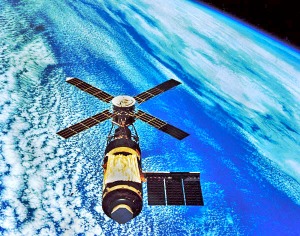
Photo courtesy of NASA

Photo courtesy of NASA

Solar storms and geomagnetic energy presents a spectrum of threats to satellite operations. Scientist, physicists and aerospace engineers have realized the challenges solar storms present to satellites since they were first launched into orbit.  The geomagnetic energy caused from mass solar energy interacting with the Earths magnetic field, can cause satellites to lose their orientation and if not corrected… can end their lives or even send them hurling towards Earth . Geomagnetic energy is similar to the static electrify you create when walking on a carpet and then is discharge by touching a grounded object. In satellites there’s no way to discharge the electricity, so it will continue to buildup energy and can fry the tightly packed circuits or damage one of the orientation gyros within it. Another problem created from a GIC is the magnetic energy it contains, which can erase the memory in your computer or any memory storage device. The list of essential industries and services that are threatened by CIGs, goes well beyond the banking and financial industries.
Telstar 1 Developed by Bell Labs and a consortium  of international enterprises

Telstar 1 Developed by Bell Labs and a consortium of international enterprises

Even though this subject is well know in the satellite  industry, it’s not a topic a journalists will have much luck in finding someone to go on the record for in interviews. Satellite companies don’t like admitting the reasons for technical problems experienced with their products. The military is even less forthcoming with satellite information. It’s understandable why the armed services maintains a proprietary stance on its satellites, but commercial satellite companies could benefit themselves and the entire industry by sharing their experiences with solar storm related activity.

If you have cable television, you’ve probably noticed at some time, the satellite transmitting your program being disrupted by solar storm radiation. An indicator for solar interference is digital tiling, which momentarily appears like a frozen video frame, before breaking up into smaller digital tiles. The last few times I’ve noticed digital tiling on my television, I verified it was from solar interference by going to NOAA’s space weather site, which in fact, confirmed elevated solar storm activity was happening.


Was It My Question On Satellite Solar Vulnerability,  Which Brought An Abrupt End To An Interview With U.S. Senator Maria Cantwell?

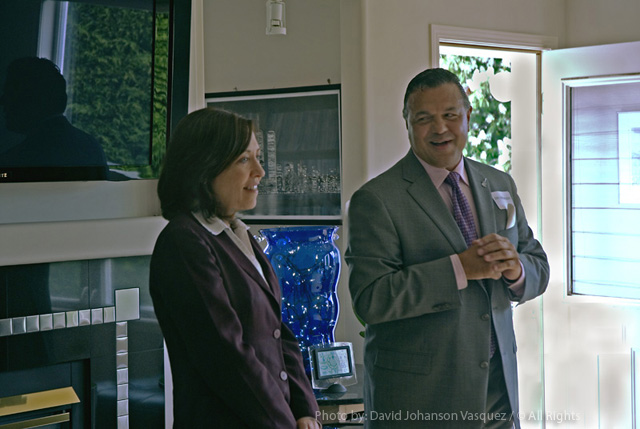
Senator Cantwell  sharing her views on technology and education. Photo by: David Johanson Vasquez © All Rights Reserved.

Senator Maria Cantwell sharing her views on technology and education. Photo by: David Johanson Vasquez © All Rights Reserved.

This past July, I arranged a phone interview with Washington State, Senator Maria Cantwell.  Senator Cantwell serves on the U.S. Senate committee for Commerce, Science and Transportation, satellites are a topic this committee holds hearings on. Cantwell is also the committee Chairman on Energy, for the Senate’s Energy and Natural Resources committee, which deals directly with the Nation’s electric grid.

The interview began with Senator Cantwell and her advisor as they were traveling to an event. After I gave a brief intro to the interview topics, Cantwell was asked to share what updates the Senate had on hardening our satellite against solar storms — particularly in respect to the aging GPS satellites, which are now being replaced. There was silence for a moment,  it sounded like the Senator and her advisor had covered the phone for a discussion. Senator Cantwell said she would like to get back to me on that subject — I sensed in that moment, the satellite topic should have been brought up last, so I quickly changed gears and followed-up with — why the Senate was taking so long in approving a Bill that would help protect the National electric grid? Again, I didn’t get a direct answer and the Senator asked if we could finish the interview at another time.

Our latest technology in the  transmission of electric power uses GPS satellites to help regulate the flow of high voltage electricity through power lines. Also used in the control and monitoring of the electric power is shortwave radio and phone lines all of which can be seriously interrupted by severe GIC caused from a solar storm.
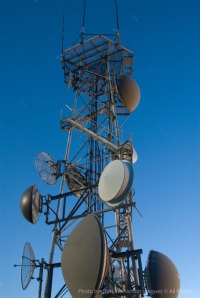
A spectrum of telecommunication may be lost during severe solar and geomagnetic storms.  Photo: David Johanson Vasquez © All Rights

A spectrum of telecommunication may be lost during severe solar and geomagnetic storms. Photo: David Johanson Vasquez © All Rights

As it turned out, the Senate later that month approved 84-11 to move forward with advancing the proposal for Cybersecurity Act of 2012, which includes protecting the electric grid. As an example of taking one step forward and then taking two steps back — the Senate voted down in August and again in November the Cybersecurity Act. Part of the reason for the Bill not being approved is because of a legislative tactic, which attaches unrelated or conflicting objectives to the Bill, so that opposing side feels they can get more out of the negotiations. It’s seems startling in this era of politics, when the Congress or Senate is able to come together and quickly pass any new law without using this protracted tactic.                      

EWA FARM 108.2

It has to be noted, this was a phone interview, it wasn’t  face to face, it’s possible a more pressing matter came in while the interview was in progress. Also, the  Senator was in the final months of her  Senate election campaign and probably was advised to not comment on anything, which could be perceived as politically damaging.

The interview illustrates how challenging it is to help inform the public, along with government officials on what we all are facing from an impending 100-year solar storm event. I have contacts within the electric power industry, including the Bonneville Power Administration, which have been helpful in providing their own perspective on geomagnetic storms, but they’ve all asked to speak off the record. Unfortunately there’s to much pressure to play down the GIC issue from inside the power industry. It’s not pleasant realizing how poorly prepared we are for a potential natural disaster on this scale — that’s why I believe, “mainstream corporate media” has neglected informing on the consequences solar storms can have on society. In reality, there are  precautions which can be used to help protect the grid and society — but it requires courageous political leadership, which is almost as big as the problem its self.

SubS_BPP_70926_bt84

An Overstretched, Electric Power Grid Creates the Mother of All Antennas!

Government regulators, private and most public power companies have missed critical opportunities to invest in, strengthen and protect our electric power infrastructure from solar geomagnetic storms. Since the wake-up call of the 1989 Hydro-Quebec solar storm, our nation’s electrical grid has been overburden with higher demand and added thousands of high-voltage transmission lines. The vast network of power transmission lines stretching over the continent creates the mother of all antennas, by channeling geomagnetic energy into the electric grid. Like a lighting rod in a thunder storm, the grid’s high-power transmission lines will channel the solar storms converted energy. The lack of investment and overuse of the grid makes it much more vulnerable than it ever was in 1989. An impending solar storm could produce the “perfect geomagnetic super storm,” which in a matter of minutes… decimates most of the nation’s ability to transmit power for several months or even years.

Recently there were comments in an open online physicist forum, regarding  threats from geomagnetic storms to the National grid. One thread mentioned a possible way to stop a serious GIC event from destroying high-voltage transformers, would be to physically cut the power lines to the transformers. Another physicist replied that the plan just might work, however he wasn’t sure anyone would be willing an attempt to physically interrupt the electricity collecting behind a continent of power lines.   IND MTS Clouds BPP_E116

OilWell_BPP__034

Underground pipelines and rail lines are also perfect conductors for channeling GIC’s electric current and have their own issues relating to damage from electro magnetic energy.

Envirn Indust_BPP e1007

In the 1989 Hydro-Quebec geomagnetic storm, there was only 90 seconds to make a decision on what action to take. Most likely, power utilities today are more prepared with an action plan — however deciding to shut down any section of the grid is an extreme responsibility for an individual. To give an example, last November I was in Honolulu, Hawaii, meeting with a friend who works for the Core of Army Engineers. She mentioned, earlier in the year on the Island of Oahu, a serious problem occurred with the transmission of electricity. A plant operator realized something was critically wrong and made the decision to disconnect the power, which caused large sections of the Island to lose electricity. The initial response from the public and local media was anger and criticism towards the operator, for shutting down the power without notification to thousands of people. It turned out the utility operator actually saved the system from being severely damaged by deciding to act quickly. In this event if the power was allowed to remain on, it could have caused severe system damage and  with repairs extremely expensive. So in reality the operator’s quick decision, and courageous action saved the day for thousands of customers.

Image courtesy of NASA.

Image courtesy of NASA

Deregulation of the Power Industry, Combined With No Centralized Authority over the National Grid In An Emergency  — Potentially Jeopardizes the Economy and Our Safety.  

Deregulation of the power industry has been an adopted policy  since the 1980s. It was supposed to encourage industry competition, for creating greater profits for the utilities, allow for steady improvements of infrastructure and lower cost for consumers. In reality deregulation has failed to deliver on its stated objectives.

Independent and comprehensive cost/benefit studies were not completed before deregulation was adopted. Joseph Swidler, former chair of the Federal Power Commission, stated in 1990 editorial of The Electricity Journal — While there is bitter disagreement over … changes, there can be little argument these are occurring haphazardly without the benefit of comprehensive analyses at a national level.” A specific example is the absence of an analysis of the decrease in benefits from coordination as mentioned above, since competition typically results in decreased coordination. [A. CasazzaAllan J. Schultz and Joseph C. Swidler A brave new world: Let's look before we leap The Electricity Journal, 1990, vol. 3, issue 9, pages 40-43]                                             Money_int _BPP_a223

Engineering originally defined the qualifications and standards used for policy and management in the power industry.  After deregulation regulated the industry, marketing and finance became the policy and management standard.

Environmental stock photography for a New Dawn.

While the original standards used in the power industry were not perfect, it was more reliable and efficient than the current system — which has overstretched the National grid with higher capacity transmission lines and not sufficiently updated key infrastructure needs. Deregulation is what allowed for large scale fraud and market manipulations to take place. This created unethical opportunities to gouge private consumers and large corporate customers by the former Enron Company in the early part of the 21st Century. 

The Issue of High Voltage Transformers.

According to industrial insurer’s publications, deregulation has forced the majority of power utilities to survive on a slim profit margin, which does not provide adequate reinvestment for infrastructure or necessary research and development. Many of the high voltage transformers still function today are at the edge of their life expectancy. It typically takes three years to order, instal and have a transformer ready for service. High voltage transformers are no longer manufactured in the U.S.. On average, these industrial transformers weigh 100 to 200 tons and are to large to be sent by aircraft. Ironically these transformers require massive amounts of energy to manufacture.     

A severe geomagnetic storm creates geomagnetic induced current (GIC), which transfers massive electric energy through the path of least resistance. This energy travels through water, earth and especially through metal such as underground pipes, rail line and electric power lines. The GIC saturates transformers, which distorts the voltage in the system and violently disrupts the entire process of transferring electric power. 

                                                                              SubSt_BPP0709_bt73             

As a critical component in the distribution of electric power, transformers have proven vulnerable to geomagnetic energy and their survivability is a major concern to engineers and scientist.  It’s likely a majority of the high voltage transformers would be at risk from the geomagnetic energy caused from a super solar storm. The transformers and the Nation’s electrical grid are more vulnerable on the East coast due to how overstretched the system is there. In the Western part of the U.S. the power utilities have been more proactive in protecting transformers and the grid is not as densely connected as it is in the East (at least in theory.) The further south in longitude a power grid’s location is a factor for lessoning the affects from a geomagnetic storm. Also a location’s geology is factor, some rock compositions conduct geomagnetic energy more efficiently than others.

According to leading engineering experts in the power industry, a practical strategy to protect the high voltage transformers is to install a surge protector like component on each transformer. The devices are about the size of a washer machine and would cost from $ 500 million to $ 1 billion dollars for the entire coverage. That’s probably the best value  for an insurance policy which would cover the Nation’s electrical grid, especially compared to the alternative of replacing  several hundred industrial size transformers.

Power

Transformers a risk to keeping the power on – 360 News – Lloyd’s

A Comprehensive Study, With Extensive Geomagnetic Storm Computer Modeling.

In 2010, The Oak Ridge National Laboratory produced an extensive report titled: Geomagnetic Storms and Their Impact on the U.S. Power Grid. The Metatech Corporation was contracted to produce extensive computer modeling on various solar and geomagnetic storm scenarios. The report has been presented to both the U.S. Senate and  House Congressional subcommittee hearings. Here’s a link to see for yourself how severe and extensive solar storm impact is likely to be using computer modeling.  

http://www.ornl.gov/sci/ees/etsd/pes/pubs/ferc_Meta-R-319.pdf

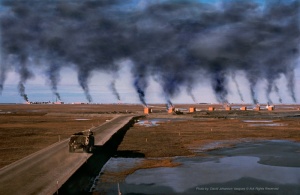
The Prospect of 400 Chernobyl’s
                                                                                                               400_chevnob_4E103

.

Russia’s Chernobyl and the United States’ Three Mile Island, are considered two of the greatest nuclear power plants disasters in history. Their legacy was clouds of lethal radiation, which caused mass evacuations and contaminated areas still not safe for people to inhabit. When these nuclear accidents occurred, there were no earthquakes, hurricanes or tornadoes to blame. The cause was a combination of technological failure and human error, which prevented the reactor’s cooling system to function, ultimately causing the nuclear disasters.

On March 11, 2011 the nuclear power plant in Fukushima, Japan  experienced a violent 9.0 earthquake, followed by a massive tsunami. This time it was a natural disaster which caused a failure of the reactor’s cooling system. The backup electric generators to the reactors cooling system also unexpectedly failed, causing the reactors to begin overheating. The reactor released a  substantial radioactive cloud, which forced a 20 mile radius evacuation.

There are federal disaster relief agencies, scientists and engineers questioning if a super  geomagnetic storm would burnout the backup generators for cooling a nuclear power plant’s reactor. Another question is, will the trucks used for hauling diesel to backup generators, even work after waves of geomagnetic energy travel through a vehicles microelectronics. Any type of car transportation or truck transport  will be extremely limited, if electricity is not generated to pumping gasoline and diesel from service stations.

In Hurricane Sandy and Katrina, a number of hospital’s critical backup generators failed to operate. It’s uncertain if backup generators will survive a severe geomagnetic disturbance from a solar storm. With over 400 nuclear power plants throughout the world, a serious geomagnetic storm, could potentially lead to loss of all electric power to reactor core cooling systems, which would release radiation contamination on a global scale.


The Tragic Events of the RMS Titanic Serves As A Cautionary Analogy

Arctic_Ice_Field_BPP_6E54

This past April marked the 100 year anniversary of the “unsinkable” Titanic ocean liner’s maiden voyage. The once modern looking, massive ship was state of the art technology in 1912 — today it represents human arrogance and hubris towards over reliance on technology. The  captain of the Titanic,  Edward J. Smith, was quoted, of ‘not conceiving any disaster which could happen to his vessel’ — after all, no major passenger ship had been lost for nearly 50 years before the launch of the Titanic.

882 feet (269. meters) long -maximum breath 92 feet (28. meters) 46, 328 gross registered tons.

882 feet (269. meters) long -maximum breath 92 feet (28. meters) 46, 328 gross registered tons.

White Star Line of Liverpool, England was the premier shipping company at the beginning of the 20th Century. White Star commissioned the construction of RMS Titanic – an Olympic class steam liner.  The passenger ship was outfitted with twin colossal, coal-fired reciprocating turbine steam engines, and the ship’s electric generator produce more power than an average city’s power-plants at that time. It also featured the latest wireless communication technology, capable of sending and receiving signals 1,000 miles away. Owned and operated by the Marconi Company, the radio room was operated 24/7 using two technicians. The radio’s functions were primarily for commercial passenger telegram services, but it also served an operations function for the Titanic as it received useful weather reports and ice warnings.

A functional, forced air heating system used electric fans to push warm air through a ventilation network. The Titanic could in an emergency, produce its own fresh water from seawater using a desalination process. Many new living improvements and conveniences on this marvelous, “floating city” employed advance technology created during the late industrial era.

RMS Titanic in its final stages of construction is being outfitted before sea-trials.
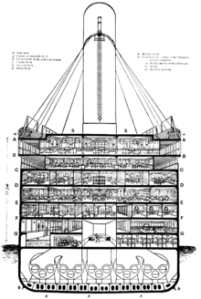
RMS Titanic in its final stages of construction is being outfitted before sea-trials.

220px-Titanic_cutaway_diagram

Full Speed Ahead Into the Night and Unseen Ice Fields

On April 14, 1912, three days into its maiden voyage the Titanic with its 1,317 passengers and 885 crew members moved swiftly across the North Atlantic. The ship averaged an efficient, 21 knots per hour (24 mph; 39 km/h) through the icy cold waters and was less than 1000 miles from its New York destination. As the streamliner approached the coast of Newfoundland, skies were clearing over an unusually calm Atlantic Ocean. Throughout the day, Titanic’s radio operators received warnings from various ships in the route ahead of where they would soon enter — the captain responded by charting a 10 mile precautionary adjustment to the south for the ships heading. Throughout the day, warnings in Morse code reached Titanic’s radio operators in increase numbers and with more alarming urgency. The Captain assured the concerned operators — their ship had nothing to fear from icebergs and they should  attend to the passengers’ important communication needs. As the late afternoon melted into twilight,  Titanic was cruising at full-steam ahead and virtually blind in the calm featureless night.  

Comparison of Morse Code.

Comparison of Morse Code.

Two ship lookouts climbed the long later attached insde the steamship’s smoke stack to reach the crows nest for the last time. Unfortunately, the bridge’s binoculars were missing, so the men were forced to rely on their plain eyesight to see any impending danger. The Titanic cruised effortlessly through the flat calm ocean, creating a false sense of security to the crew and passengers — but with icebergs in the water, on a moonless night meant no splashing waves to help warn a watchful lookout. Just before midnight, Fred Fleet, the lookout  in the crows nest spotted the Titanic’ s dreadful rendezvous with destiny — a massive iceberg looming dead ahead. The bridge responded immediately by skillfully turning the ship away from the iceberg, the quick maneuver nearly was successful — but then… a horrible sound of solid ice scraping against sheets of steel plates and the profound, deep shutter delivered to the ship — telegraphed the Titanic was mortally wounded. Five watertight compartments were breached just below the waterline by the jagged ice, if just one-less compartment would have torn open, this story wouldn’t be told. The largest ship in the world, this floating world with its community of families, workers and wealthy aristocrats, now had less than three hours before the unthinkable end would happen.

IND MTS Clouds BPP_E20

The Captain and the Star Line management on board must have fallen into total shock and denial of what was happening to their Titanic, technological wonder. These individuals in charge with the responsibility for the ship’s operations and ultimately the passengers safety, were steeped in overconfidence, as they never conducted drills or consider necessary emergency contingencies and procedures. Fortified with hubris that the Titanic could withstand any act of nature, they lost site of their most important duties of safe operations and procedures — after all, they believed in the myth their ship was built to be unsinkable.

In the same way the Titanic’s symbolizes a mythic system of indestructible technology, which can withstand anything nature can throw at — our civilization and specifically our Nation is repeating some of the basic errors regarding — an over reliance, complacency, and trust in life supporting technologies.  We’ve been so fortunate to have built a civilization, which harnessed electrical technology to run our industry, heat our homes and provide our security.  For decades, with few exceptions, we’ve had uninterrupted, reliable electric power that is now, taken for granted. Most of us have become shortsighted, with blind-faith in assuming we’ll have reliable electric power, whenever or wherever we need it.

Recorded history has demonstrated solar storms are a real threat to our technologies and civilization. Solar cycles,flares and storm events are a regular occurrence — a super geomagnetic storm will happen again, creating potential for catastrophic effects beyond any scale humanity has ever faced. Reliable, national and international scientific institutions and governmental agencies in charge of safety and security, increasingly  warn us of these real threats to the electric grid. 

Unlike RMS Titanic’s captain, whose hubris and over reliance on the technological engineering of his steam liner, lead to the tragic loss of his passengers and the world’s largest ship  — our elected officials and top power industry executives, need awareness of our technology’s fatal weakness and decisively act now to defend it! If our Nation, like the Titanic waits until the impending disaster is upon us to act… it will be to late — the  majority of our population, like those on the doomed infamous ship a 100-years ago will be scrambling for lifeboats that aren’t there. The millions of lives depending on electricity to transport food, medicine and provide security will have no safety-net for years to come. The threat from a natural continental or global catastrophic event is a known reality. It’s time for everyone to educate themselves and have an open dialogue with their families and communities regarding what precautions are necessary to minimize their effects. ~

Particle energy shock wave From solar storm is mostly defelcted by Earth's magnetic poles

Particle energy shock wave From solar storm is mostly defelcted by Earth’s magnetic poles

Tech_abst_BPP__3ea1

Government Agencies Which Are Warning Of Solar Storm Potential Dangers

Severe Solar Storms Could Disrupt Earth This Decade: NOAA

Scientists warn solar storms could be “global Hurricane Katrina” | Homeland Security News Wire

Testimony Given to  the U.S. Congress Regarding Threats to the National Grid from Solar Storms

http://www.solarstorms.org/CongressSW.html

SHIELDAct.com / Read H.R. 668 – The SHIELD Act

Testimony Given to the  U.S. Senate Regarding Threats to the National Grid From Solar Storms

http://www.ferc.gov/eventcalendar/Files/20110505082259-Testimony%20McClelland%20(5-3-11%20Final).pdf

http://www.ferc.gov/eventcalendar/Files/20120717100957-7-17-12-FERC-Testimony.pdf

Who Is In the Lead For the Darwin Award Between the U.S. Senate or Congress

Here are some links for your review to inform your own decision on who deserves the Darwin Award.

Feds and Utilities battle over Solar EMP threat in 2014 | SpaceBattles.com

Senators debate security of electricity grid – Washington Times

Senate dumps strategy to prevent EMP damage | The Total Collapse

Murkowski Blocks Effort to Protect US Power Grid

What Can We As Citizens Do To Protect the National Grid

 

Sun_Drama_red_e3

.

.

.

Please check back to view the complete story — new content is being added daily, including an interview with Washington State Senator Maria Cantwell and comments from government agencies and electric power grid representatives.

.

Solar Storm  & Electrical Power Portal  [Editorial Links Government Links Industry links & Resources]

Solar Storms & Solar Weather

Space: NOAA Watch: NOAA’s All-Hazard Monitor: National Oceanic and Atmospheric Administration: U.S. Department of Commerce

NOAA / NWS Space Weather Prediction Center

Solar Storm Warning – NASA Science

SpaceWeather.com — News and information about meteor showers, solar flares, auroras, and near-Earth asteroids

Active Solar Regions – HAMwaves.com

Solar Satellites Research

Solar Shield–Protecting the North American Power Grid – NASA Science

Electric Power Industry Related to Solar Storm Issues

Disputes Dog Efforts to Protect Transmission Grid From ‘High-Impact, Low-Probability’ Threats – NYTimes.comEmergency Preparedness & Societal Concerns Related to Solar Storms & EMPs

Coming solar storm not likely to affect power grid – Technology & Science – CBC News

Are We Smart Enough to Survive … Or Will Humanity Win a Darwin Award? – Washington’s Blog

Editorial Articles, Media, Blog – Links & 

Not Ready for a ‘Solar Sandy’ – NYTimes.com

Guarding Against Solar Storms – NYTimes.com

Impacts of Severe Space Weather on the Electric Grid by the MITRE Corporation, 11-2011.

Lawrence E. Joseph: The Solar ‘Katrina’ Storm That Could Take Our Power Grid Out For Years

Scientist Concern, Massive solar flare storm may occur before warning system is complete | The Guardian Express

Solar storm sparks dazzling northern lights | World news | The Guardian

Solar Storm’s Auroras May Dance Above Mid-U.S. This Weekend | Wired Science | Wired.com

Solar storm incoming: Federal agencies provide inconsistent, confusing information – Capital Weather Gang – The Washington Post

The Latest Full Throttle Multimedia Video of Seattle From the R22 Beta Helicopter – Part 2 of 2

29 Nov

Multimedia video essay by: David Johanson Vasquez – © All Rights

BigPictureOne & ScienceTechTablet are dedicated sites for including excitement, experience & education in E-learning. For an alternative graphic format of this multimedia essay please visit: bigpictureone | Using photos, video & words to explore the Big Picture WordPress.com site

Have you ever traveled by helicopter and encountered a full-throttle-ride at a tree top level? Part 2 of my Helicopter video series is now online for you to experience. There are valuable safety tips, aerial photo techniques, employment requirements for helicopter mechanics  as well as the ultimate joyriding aerial views of Boeing Field and Seattle!

Collaboration and Clear Communication

Clear communication and teamwork between helicopter pilots and flight mechanics is essential for aviation safety. Professional collaboration and working experience is also required between a pilot and photographer for ensuring successful photographic results. On the day of this video was shot our helicopter experienced technical issues, which needed repairs before completing the Port of Seattle’s aerial photo shoot. With solid communication between pilot and ground crews established, the repairs were completed as the fast and furious activity of aircraft went on all around us at one of the nation’s busiest international airports.

Video by: David Johanson –  © All Rights

Helicopter Rear Rotor Blades Can Be a Liability

A February 2007 Rotor & Wing Magazine article by Tim McAdams, used two tragic crash events involving helicopter aerial photography to illustrate potential hazards encountered from the helicopter’s rear rotor. In the article it reported, “the NTSB determined the probable cause as the pilot-in-command’s improper in-flight decision to maneuver at a low airspeed with a left quartering tailwind, which resulted in a loss of tail-rotor effectiveness.”  The investigation of these and similar crashes helped to create the FAA Advisory Circular AC90-9, that warns pilots of conditions which can cause loss of flight stability due to stress on rear rotors.

Under no circumstances should anyone including ground crews be near the helicopter’s rear rotor while the engine is on. The video shows why helicopter rotor blades are painted with bright patterns to warn of their potential danger.

Fast and Furious

Helicopter operations are virtually never boring and are the centers of major activity. See how the latest video in the series explores Seattle’s dynamic landscape, Boeing Field operations and helicopter safety.


REFERENCES: (Click on these sites to learn more on the subject)

Safety Around Helicopters

http://www.fs.fed.us/fire/av_safety/promotion/safety_alerts/IA%20SA%2011-03%20LTE%20Final.pdf

Rotor Hazards

Helicopter Hazards | Aeronautical Knowledge Handbook

Helicopter Landing Area Safety

Rotor & Wing Magazine :: Safety Watch: Loss of Tail Rotor Effectiveness

Tail rotor – Wikipedia, the free encyclopedia

The Kopp-Etchells Effect: Eerie Halo of a Helicopter’s Rotor Blades in a Dust Cloud – Neatorama

http://www.dtic.mil/cgi-bin/GetTRDoc?AD=AD0282087

The Spokesman-Review – Google News Archive Search

Robinson Helicopter Co.

Helicopters Northwest – Boeing Field

Intersting facts about the historic Smith Tower

HistoryLink.org- the Free Online Encyclopedia of Washington State History

Smith Tower – Wikipedia, the free encyclopedia

Walking Tours (Self-Guided) – Visiting Seattle – Seattle.gov

http://www.soundtransit.org/Documents/pdf/about/Chronology.pdf

Downtown (Central Business District) guide, moving to Seattle | StreetAdvisor

Columbia Helicopters

CH-47JA Helicopter | Helicopters | Kawasaki Heavy Industries, Ltd. Aerospace Company

Boeing CH-47 Chinook

Boeing: History — Products – Boeing CH-47 Chinook Rotorcraft

MD Helicopters MD 500 – Wikipedia, the free encyclopedia

Boeing: History — Products – Hughes OH-6 Cayuse/500 Military and Civilian Helicopter

Helicopter Safety | Flight Safety Foundation

http://drum.lib.umd.edu/bitstream/1903/1900/1/umi-umd-1880.pdf

King County International Airport/Boeing Field

Port of Seattle


A Full Throttle Multimedia Video of Seattle From the R22 Beta II helicopter – Part 1 of 2.

16 Oct
Multimedia essay by: David Johanson Vasquez  © All Rights 

The Robinson R22 helicopter is often described as a sports car version of helicopters — ultra light in weight, it takes off quickly and is so responsive it will literally make your head spin. Weighing in at only 1200 pounds fully fueled, it often feels like you’re wearing the helicopter like a “jet-pack” rather than riding in it. As a thrilling life experience, helicopter flights are at the top of the list, however, it requires the highest level of professionalism to safely fly and be involved with helicopter operations.

Videos by: David Johanson © All Rights

http://www.youtube.com/watch?v=JMVD3-P0fdM&feature=player_detailpage

 As a multimedia specialist who produces stories supported by photography and video content, I’ve used a variety of helicopters for an image capture platform. Everything from the compact , high – performance Huey 500D up to the  large tandem rotor  Kawasaki KV 107 (a licensed version of  the Boeing Vertol BV107 “Chinook” helicopter.) It’s the R22′s light weight, which  in my opinion, gives you the most thrill for getting from point A to point B.          

.

The Robinson R22 Beta II Helicopter was arranged for me to use as part of ◊ a six-month photography contract with the Port of Seattle. In between locations photographed for the Port, I shot video content for multimedia educational applications.

Multimedia Enhancements For Greater Learning 

This multimedia video includes graphic overlays, lower third titles and an integrated color key, which indicate: ΘSeattle historic architecture (Smith Tower)↔ municipal, transportation and industry infrastructure along with the  R22′s performance ratingsThe style of writing for this multimedia essay structures information using bold and italicized text  to optimize key content for quick scanning by readers. For assessing your recall and comprehension a quiz is included at the end of this essay. You’re also invited to explore provided web links related to the essay’s content  for learning more about subjects of interest. Your opinions and insights on how to enrich this multimedia experience is valued, so a comment section is included for suggestions and feedback.                                 

Advantages & Challenges For Image Capture from Helicopters     

The advantages of using a helicopter over an urban setting are many including: multiple low angle views, which are unavailable when using fixed winged aircraft, hovering over specific areas, an efficiency in reaching desired altitudes for a variety of perspective vews.  

Ξ Aerial photography and especially video are challenging to produce in a helicopter compared with using fixed winged aircraft.  Two major issues, which can hamper imaging are: ↑ vibrations and noise caused from the engine next to the cab and rotor vibrations caused from elastic torsion deformations while flying. Aerospace companies such as Boeing and big budget feature film projects will occasionally use high-end aerial photography  companies, which have specialized cameras mounted into their aircraft. This specialization can reduce some aerial photography vibration issues associated with hand held cameras, but it requires a large budget to justify the expense. The R22 helicopter is a very light craft and the summer afternoon, which was used to shoot these aerials, had strong turbulence, so some scenes will have some unavoidable vibration and noise in them. 

This is the first of two videos, which features aerial views of Seattle provided by  Helicopters Northwest out of Θ Boeing Field. The second video, soon to be posted, shows the return for refueling and includes initial mechanical issues getting the helicopter back in the air.  In regards to refueling, it’s critical a helicopter has been properly grounded before operations begin. Helicopter rotor blades are capable of generating large amounts of static electricity —especially in dry, dusty environments, which can pose a serious threat to both flight and ground crews.                

Outcomes From Infrequent Helicopter Accidents Are Usually Tragic… But There Are Exceptions

One of my first jobst after graduating from college was with KREM-TV (King Broadcasting) in Spokane. A few years after I moved on from working with the station a tragic accident occurred with its news helicopter. The helicopter had just picked up Gary Brown —an outstanding KREM videographer (who I remembered as always being upbeat, positive and friendly) — when its rotor blades struck the guy wires supporting the station’s transmitter tower. Both the photographer and pilot were killed instantly.

I’ve included a link below, which has an article with a photo of the accident scene from the Spokane, Spokesman Review - May 7, 1985 addition. The story has comments from a Federal Aviation Administration (FAA ) official coordinating the accident’s investigation. Ironically on the same page is a syndicated, New York Times story of a larger helicopter accident, which occurred on the following day of May 6. That tragedy was of the loss of 17 Marines in a large Sikorsky, CH-53 Sea Stallion off the southwestern coast of Japan. A joint operations helicopter reported witnessing the CH-53 suddenly lost power and dropped 500 feet into the sea. 

About ten years ago a friend of mine survived a helicopter crash, with only a few scratches. He had bought a used helicopter from a sherifs department to start his own flight service business. Over time, parts needed to be replaced with upgrades and he was sold a defective fuel-line, which was installed and failed while in flight. He was approximately 100 feet in the air with two clients when the helicopter’s engine shuttered to a stop. Fortunately he got his helicopter into ↑ auto rotation (emergency helicopter procedure, which shifts rotor blade’s pitch to use stored kinetic energy for making a “soft landing”) and as they began descending, the helicopter’s skid caught the center of a tree and its branches helped them slow the descent even more. 

Education and Training Is the Key to Helicopter Safety

Overall, if you consider how many hours and flights in a day helicopters perform flawlesslythey are safe and reliable. What these specialized aircraft can achieve in vertical maneuverability and performance is nothing short of marvelous and amazing. To ensure engines and structural frames are safely maintained the FAA certifies aviation mechanics using  two certifications. Helicopter mechanics are required to have: an air frame mechanic and or a powerplant mechanics certification. Most employers prefer their mechanics having both certifications, which requires 1,900 hours of coursework in order to pass oral and written exams that prove their skills.           

Both videos demonstrate the essential level of professionalism required for helicopter operations during a high volume of jet and helicopters landings and takeoffs at Boeing Field.

Now, just sit back and enjoy the ride!       


.

.

QUESTIONS FOR CONTINUOUS LEARNING AND TO TEST YOUR RECALL?

1.) What are the advantages and disadvantages of using a helicopter for aerial photography?

2.) Name one of the first skyscrapers, which also was the tallest building on the West Coast until 1962?

3.) What is the most important overall requirement for flying helicopters?

4.) What is the name of the emergency procedure for when a helicopter’s engine fails inflight and what process takes place for a soft landing?

5.) Name the FAA requirements for being a helicopter mechanic and why are they necessary?

6.) Describe the multimedia enhancements on the video, which were used to promote greater learning.

Integrated Learning Color/Symbol Key for Career Technical Education:

Navy BlueAerospace Engineering related including: aerodynamics, structural dynamics & avionics

Ξ Dark Green — Multimedia & graphic design techniques used for Integrated learning

Θ Maroon — Historical structures, locations and or districts

◊ Indigo – Professional photography & video production

 Purple — Civil engineering related


REFERENCES: (Click on these sites to learn more on the subject)

The Kopp-Etchells Effect: Eerie Halo of a Helicopter’s Rotor Blades in a Dust Cloud – Neatorama

http://www.dtic.mil/cgi-bin/GetTRDoc?AD=AD0282087

The Spokesman-Review – Google News Archive Search

Robinson Helicopter Co.

Helicopters Northwest – Boeing Field

Intersting facts about the historic Smith Tower

HistoryLink.org- the Free Online Encyclopedia of Washington State History

Smith Tower – Wikipedia, the free encyclopedia

Walking Tours (Self-Guided) – Visiting Seattle – Seattle.gov

http://www.soundtransit.org/Documents/pdf/about/Chronology.pdf

Downtown (Central Business District) guide, moving to Seattle | StreetAdvisor

Columbia Helicopters

CH-47JA Helicopter | Helicopters | Kawasaki Heavy Industries, Ltd. Aerospace Company

Boeing CH-47 Chinook

Boeing: History — Products – Boeing CH-47 Chinook Rotorcraft

MD Helicopters MD 500 – Wikipedia, the free encyclopedia

Boeing: History — Products – Hughes OH-6 Cayuse/500 Military and Civilian Helicopter

Helicopter Safety | Flight Safety Foundation

http://drum.lib.umd.edu/bitstream/1903/1900/1/umi-umd-1880.pdf

King County International Airport/Boeing Field

Port of Seattle


Who Were the Titans of Telecommunication and Information Technology?

31 Aug The Titans of Technology
By: David Johanson Vasquez © All Rights

Multimedia Essay By: David Johanson Vasquez © All Rights - Second Addition – Series 1 & 2

— Inventions are rarely the result of just one individual’s work— but are created through collective efforts overtime,  from several individual’s observations, theories and experiments. Benjamin Franklin’s role in demystifying electricity, Michael Faraday’s discovery of “induced” current, Nikola Tesla and Guglielmo Marconi’s wireless radio communication… are just a few of the technology pioneers responsible for developing modern telecommunications. I regret not having the resources  for this essay’s inclusion of all men and women, whose’ discoveries made telecommunication and information technology possible.    

Definition of technology — “the systematic application of scientific or other organized knowledge to practical task.”  (J.K Galbraith)  ”the application of scientific and other organized knowledge to practical tasks by… ordered systems that involve people and machines.” (John Naughton)

For an alternative graphic format on this essay please visit:  http://www.BigPictureOne.wordpress.com

Telecommunications took its first infant steps as the industrial revolution was rapidly compressing concepts of time and space. The first half of the 19th Century witnessed modern societies using steam locomotive trains for mass transit and electronic communication through telegraph technology. Steamships shrunk the world by delivering capital goods, raw resources and people to remote locations within fractions of the time it took before. With the industrial revolution nearing its peak at the close of the century, a new communication innovation was developed, which helped transform the modern age into a postmodern era.  Inventor, Alexander Graham Bell’s Washington D.C. company,which developed the telephone, eventually evolved into a prime research laboratory. His vision for a R&D lab, created a foundation for the digital technologies of today. In the following century, another key, R&D technology titan— Xerox PARC  enters the stage, which helps to set in motion personal computing and expand the information technology revolution.

The steamship S.S. Empress of India near Vancouver B.C.
From the private collection of: David A. Johanson ©

Scottish born Alexander Graham Bell
from the collection of: Library of Congress

The French Technology Connection

A French, visionary government in 1880, recognized the importance of Alexander Bell’s invention, and awarded him the Volta Prize. A sum of 50,000 francs or roughly, $ 250,000 in today’s currency came with the honor. The funds were reinvested into research for use in education to enable knowledge on deafness. Growing investments to fund the creation of Bell Telephone Company on March 20, 1880 allowed for expanded research on recording and transmission of sound.

Can You Hear Me Now

 The telegraph and telephone were the first forms of electrical, point-to-point telecommunications and qualify as early versions of socialmedia platforms. Over time, phone service convenience  and quality have steadily improved.  In my youth during the early 1960s, I spent summers visiting relatives with farms in Wisconsin who had phones connected on “party lines” (several phone subscribers on one circuit).  When picking up a phone connected on a party line, your neighbor might be having a conversation in progress. If  a conversation was taking place  you could politely interrupt and request to use the phone for urgent business. Today, phone service has become so advance that it is taken for granted as a form of personal utility. In 1925, Bell Telephone Laboratories were created from the merger of the engineering department of American Telephone & Telegraph (AT&T) and Western Electric Research Laboratories.  Ownership of the labs were shared evenly between the two companies; in return, Bell Laboratories provided design and technical support for Western Electric’s telephone infrastructure used by the Bell System. Bell Labs completed the symbiotic relationship for the phone companies by writing and maintaining a full-spectrum of technical manuals known as Bell System Practices (BSP).     

An Invisible Bridge From Point A to Point B

Bell Laboratories instantly began developing and demonstrating for the first time, telecommunication technology, which we now depend on for economic growth and to hold our social fabric together. Bell accomplished the first transmitting of a long-distance, 128-line television images from New York to Washington, D.C. in 1927. This remarkable event ushered in television broadcast, creating a new form of mass-multimedia. Now people could gather together in the comfort of their homes and witness… live news reports, hours of entertainment and product advertisements, which helped to stimulate consumer spending for a growing economy. Radio astronomy’s powerful space exploratory telescope, was developed through research conducted by Karl Jansky in 1931. During this decade, Bell lab’s George Paget Thomson was awarded the Nobel Prize in physics for his discovery of electron diffraction, which was a key factor for solid-state.

The Forecasting Power of Numerical Data

An important component of renewable energy is the photovoltaic cell, which was developed in the lab during the 1940s by Russell Ohl. A majority of the United States’ statistician superstars, such as W. Edwards Deming, Harold F. Dodge, George Edwards, Paul Olmstead and Mary N.Torrey all came from Bell Labs Quality Assurance Department. W. Edwards Deming’s genius would later  go on to help revitalized Japan’s industry and be used in Ford Motors’ successful, quality control initiatives in the 1980s.

W. Edwards Deming

The U.S. government used Bell Labs for a series of consulting projects relating to highly technical initiatives and for the Apollo program. Several Nobel Prizes have been awarded to researches at the laboratory, adding to its fame and growing prestige. In the 1940’s many of the  Bell Labs were moved from New York City to nearby areas of New Jersey. ……………………………………………………    Replica of the first transistor

Inventors of the transistor, l. to r. Dr. William Shockley, Dr. John Bardeen, Dr. Walter Brattain, ca. 1956
Courtesy Bell Laboratories

Smaller is Better in the World of Electronics

Perhaps Bell Laboratories most marvelous invention was the transistor invented on December 16, 1947. Transistors are at the heart of just about all electrical devices you’ll use today. These crucial artifacts transformed the electronics industry, by miniaturizing multiple electronic components used in an ever-expanding array of products and technical applications. Transistor efficiencies also greatly reduced the amount of heat in electronic devices, while improving overall reliability compared to fragile vacuum tube components. Once more, the labs’ select team of scientists were rewarded  with the Nobel Prize in Physics, for essential components of telecommunications.  

The mobile-phone was also created in 1947, with the labs’ commercial launch of Mobile Telephone Service (MTS) for use in automobiles. Some 20 years later, cellphone technology was developed at Bell and went on to become the ubiquitous form of communication it is today.                                                                                                            

 In 1954 the labs began to harness the sun’s potential, by creating the world’s first modern solar cell. The laser (Light Amplification by Stimulated Emission of Radiation) was dated in a 1958 Bell Lab, publication. The laser’s  growing spectrum of applications includes —  communications, medicine and consumer electronics.

A Perpetual Revolution in the Sky Unites the World

In 1962, Bell Labs pioneered satellite communications with the launch of  Telstar 1, the world’s first orbiting communication satellite. Telstar enabled virtually instant telephone calls to be bounced from coast to coast and all over the world. This development unified global communications and provided instant 24 - hour news coverage.      Bell Labs introduced the replacement of rotary dialing with touch-tone in 1963, this improvement vastly expanded telephone services with — 911 emergency response, voice mail and call service capabilities.

Image used in Byte Magazine for an article on VM2 assembly language. Photo-illustration by: David A. Johanson © All Rights

A New Distinct Language For Harnessing Machines

It’s been greatly underreported that Unix operating system, C  and C++ programing languages, essential for use in Information Technology (IT), were all created within Bell Labs. These crucial computer developments were established between 1969 -1972, while C++ came later in the early 1980s. C programing was a breakthrough as a streamlined and flexible form of computer coding, making it one of the most widely used in today’s programing languages. Unix enabled comprehensive networking of diverse computing systems, providing for the internet’s dynamic foundation. Increasingly, Bell Laboratories inventions were transforming and expanding the frontiers of micro-computing, which helped to make personal computing possible.                                                                         In 1980, Bell Labs tested the first single-chip 32-bit microprocessor, enabling personal computers to handle complex multimedia applications.

A major corporate restructure of AT&T, the parent company of Bell Laboratories, was ordered  by the U.S.  Federal government in 1985, to split-up its subsidiaries as part of a  divestiture agreementThis event proved to be an example of over regulation, which severed important links for funding technology R&D projects. Although AT&T previously had an economic advantage with a monopoly in the telephone industry, it allowed for necessary funding of Bell R&D labs.  Indirectly, U.S tax payers made one of the best investments by subsidizing the foundation for our current telecommunication and information technology infrastructure.

AT&T Bell Laboratories became AT&T Labs official new name in 1996, when it  became part of Lucent Technologies. Since 1996, AT&T Labs has been awarded over 2000 patens and has introduced hundreds of new products. In 2007, Lucent Bell and  Alcatel Research merged into one organization under the name Bell Laboratories. Currently, the Labs’ purpose is directed away from science discovery and focussed on enhancing existing  technology, which is intended to yield higher financial returns.

.

Pause & Reflect: Questions for continuous learning part 1.

1.) What were the first forms of electrical, point-to-point telecommunications?

2.) What revolution was taking place when early forms of telecommunications were invented and name at least two technology innovations?

3.) Define the word technology?

5.) Who founded Bell Research and Development Labs?

7.) Name at least two developments which Bell Labs were awarded Nobel Prizes in?

6.) Pick one Bell Lab invention, which you believe was most important for helping develop modern telecommunications or personal computing.

Any Sufficiently Advanced Technology Will Appear As Magic.                                                     — Arthur C. Clarke

.

 Advance Technology Takes Root in the West

 In the first half of the 20th Century, Bell Labs’ dazzling R&D creations aligned seamlessly to establish a solid foundation for telecommunications. Most of the Labs’ bold research had been conducted in the industrialized, Eastern portion of the United States. By the 1950s, new developments and evolving industries on the West Coast were benefiting from Bell’s technological inventions. Palo Alto’s, Stanford University research facilities, south of San Francisco, acted as a magnet for pulling in corporate transplants— most notably  IBM, General Electric and Eastman Kodak. In 1970, XEROX Corporation of Rochester, New York established a research center known as—Xerox PARC (Palo Alto Research Center Incorporated). PARC’s impact in R&D would soon be felt,  acting as a stimulating catalyst for personal computing and information technology development.  

 Creative Sanctuary For Nurturing Bold Ideas

Jack GoldmanChief Scientist at Xerox enlisted physicist Dr. George Pake, a specialist in nuclear magnetic resonance to help establish a new Xerox research center. Selecting the Palo Alto location gave the scientist greater independence and freedom than was possible near its Rochester headquarters. The location also provided huge resource opportunities for selecting talent pools of leading engineers and scientist from the numerous research centers located in the Bay Area. Once the West-Coast lab had a foothold, it became a sanctuary for the company’s creative misfitspassionate science engineers who were determine to create boldly. One of the few downsides for the new facility’s location was—less opportunities for lobbying and promoting critical breakthrough developments to top management located a continent away.

XEROX PARC had an inspiring creative influence, along with universal appeal, which attracted international visitors. A collaborative, open atmosphere helps to define the creative legacy of PARC. The cross-pollination of ideas and published research between the R&D facility and Stanford’s computer science community, pushed digital innovation towards new thresholds.

Premier Unveils the Future of Personal Computing Tools

XEROX PARC, discovered a target rich environment of ideas from  Douglas Engelbart, who worked at Stanford Research Institute (SRI) in Menlo Park. Engelbart gave the Mother of  all personal computing presentations in December of 1968, — astonishing the computer science audience with a remarkable debut of: the computer mouse, hyper text, email, video conferencing and much more.

Bitmap graphic, graphical user interface (GUI), which provides window like graphic features and icon objects — are just a few of the revolutionary concepts developed at PARC for personal computing. The list of  PC  innovations and developments continues with laser printers, WYSIWYG text editor, InterPress (prototype of Postscript) and Ethernet as a local-area computer network — inspiring PARC Universal Packet architecture, which resembles today’s internet. Optical disc technologies and  the LCD, were developed by PARC material scientist adding yet more to its diverse technology portfolio.  


 The Shape of Things to Come

 Xerox PARC’s R&D, efficiently blended these vital new technologies and leveraged it all into a personal computer workstation, called  ”Alto.” The futuristic Alto, was light-years ahead of its 1973 debut—bundled with dynamic utility including: a mouse, graphic user interface and the connectivity of Ethernet. Interest in this revolutionary PC wonder kept expanding as countless demonstrations were given to legions of intrigued individuals. The increasing demand for witnessing the power of PC computing was telegraphing the need for a new consumer market. For the first time, a “desktop sized computer” could match the capabilities of a full-service print shop.

Advance technology always comes with a hefty price tag, and the Alto was no exception, making it beyond reach of most consumers. Despite a high price-point — prestige and enthusiasm for Alto grew — as did admiration for the bold new world of Apple Computers and of its superstar founder — Steve Jobs.

Xerox Alto -1973 Was this the apple in Steve Job’s eye? It certainly was the first personal computer, which included most of the graphic interface features we recognize today.

Torch of the Titans Lights New Horizons

By 1979, Apple was beginning to advance its own user-friendly interfaces with the development of the Lisa and Macintosh personal computers. Both products featured screens with multiple fonts, using bitmap screens for blending graphics and text. There were Apple graphics engineers  associated with Xerox PARC — either through former employment or in connection with Stanford University. Apple engineers aware of advances made in graphic interfaces with PARC’s ALTO, prompted Steve Jobs to have a parlay with PARC. In late 1979, Steve Jobs with his Apple engineering entourage arrived to view an AlTO demonstration at Xerox’s facilities. The  meeting’s outcome proved Jobs’ was a master at showmanship and marketing JudeJitsu by not disclosing a previously negotiated, sizable investment from Xerox’s venture capital group

Gravitational forces began shifting in favor of Steve Jobs and Apple Computer to capitalize on the market potential for personal computing. PARC computer engineers and scientist clearly understood the economic potential of an information business they help  build… but Xerox top executives certainly did not.  Xerox had a history of dominating the lucrative copy machine market — it was the business model corporate decision makers were comfortable with and they would not risk venturing very far from.  Most of PARC’s personal computing developments experienced the same frustrating fate of withering on the vine —  allowing for lucrative opportunities to go for bargain rates to new companies like Apple Computers.

Apple’s alchemy of — perfect timing, creative talent and visionary insight quickly aligned towards harnessing information technology products for an emerging market convergence. The creative inspiration and marketing savvy, which Steve Jobs’ applied towards personal computing—created  seismic ripple effects, which we’re still experiencing today.

Nothing Ventured, Nothing Gained  

Recently there’s been a handful of media and tech industry critics—siting undiserved shortcomings of Bell Labs and Xerox PARC.  The corporate R&D labs are faulted for… not fully marketing their technology developments or capitalizing on scientific inventions. Glossed-over in these critical reviews is the fact —  most research & development lab’s success is measured on what technology or process they invent and not whether the parent company is ultimately successful on marketing the technology.  Lost in the critics is an under reporting of the titanic obstacles facing the marketing, manufacturing and distribution of innovative products.  

Thrilling technical breakthroughs are what grab headlines — rarely are the successful efforts of corporate marketing or brilliant production logistics recognized or mentioned.  It’s a disconnect to judge a R&D’ lab’s success completely  on financial returns of its inventions.

The laser printer’s success in particular, should erase the myth that Xerox PARC miss-managed all of its developments. Gary Starkweather, a brilliant optical engineer for Xerox PARC, developed the laser printer. Starkweather had pitched battles with Xerox management over promoting the laser printer, but eventually he triumphed and the laser printer went on to earn billions of dollars — enough to repay the investment cost of Xerox PARC several times over. Eventually Starkweather sensibly moved on to greater opportunities when Steve Jobs offered him a job in Cupertino. 

Brilliant R&D technology, requires an equally creative or open-minded group of executives for  converting technology innovation into a marketable product.  These decision makers must maintain iron-wills and courage to shepherd the technology product through its entire volatile development process. IBM’s iconic 305 RAMAC, the first commercial ‘super computer,’  is a classic example of a product development challenge. Introduced in 1956, the RAMAC featured a hard disk drive (HDD) and stored a — whopping five megabytes of data. Apparently, the HDD storage capacity could’ve been expanded well beyond the 5MB, but was not attempted because — IBM’s marketing department didn’t believe they could sell a computer with more storage.                    

IBM 305 RAMAC — first commercial computer to use a hard disk drive in 1956.

R&D Labs take creative risk in developing new ideas, most of these developments wont make it to market, but that’s the price of creativity. Using intuition for taking risks and knowing some failure is necessary to pave the road toward successful discoveries — builds confidence in trusting one’s creative resources. So often, the creative-process is misunderstood and undervalued in our society’s perceived need for instant control and results. In the past, I’ve personally witnessed this attitude reflected in our educational system, however the viewpoint is  progressively shifting to realize the value of the creative-process.

Steve Jobs and Apple Computers is a good illustration of a company, which traditionally emphasized and embraced the creative spirit. Creative employees are considered the most valued resource at Apple as they are encouraged to nurture their creative uniqueness. Shortsighted emphasis on quarterly results, which has effected most of American business culture, is refreshingly absent from Apple’s overall mindset, allowing for more sustained and successful business initiatives.

Where have all the R&D labs gone — Innovation vs Invention

The era of industrial, ‘closed inventive’ research & development labs — have faded into the background of yesterday’s business culture. Internal silos, once the proprietary norm, have been day-lighted to allow fresh ideas and collaborative efforts to circulate.  For the past 10 years corporations have steadily reversed their long-term, pure scientific research in favor of  efforts towards quicker commercial returns. In 2011, Intel Corporation, dropped its  ’boutique’ research ‘lablets‘ in Seattle, Berkeley and Pittsburgh  — opting for academic research to be conducted at university facilities. Intel continues to maintain its more profit oriented Intel Labs. This industry strategy has repeatedly cloned itself within the corporate research world, as it is far easier to realize a profit from innovation than it is from pure invention.

Perhaps the golden-age of great research & development labs have run their course — but not before replacing the analogue, industrial era technology, with a digital one by using creative, innovative and bold scientific vision of the R & D Bell Labs. Xerox PARC helped to extend Bell Labs marvelous inventions with a solid platform of creative research for developing mass markets in the postmodern telecommunications and personal computing of today.  ~

Pause & Reflect: Questions for continuous learning – part 2.

1.) Name the parent company and its research and development lab, which moved in California’s Bay Area?

2.) What was the profitable product, which this company had originally been built on?

3.) Give at least two reasons why this R&D lab was so inventive?

4.) What stop the lab’s parent company from realizing more profits from its inventions?

5.) What was the name of the founder and his company, which was able to creatively use and market early Silicone Valley PC innovations?

6.) What’s the difference between invention and innovation?

7.) In your opinion, who were the top 10 inventors of all time and how did they make your top 10?

.

References

wp- CREATIVE COMMUNITIES v5.indd
Bell Labs – Wikipedia, the free encyclopedia
Bell Labs
Telstar 1: The Little Satellite That Created the Modern World 50 Years Ago | Wired Science | Wired.com
Was Bell Labs Overrated? – Forbes
Top 10 Greatest Inventors in History | Top 10 Lists | TopTenz.net

History of Lucent Technologies Inc. – FundingUniverse
Volatile and Decentralized: The death of Intel Labs and what it means for industrial research
Inventive America | World | Times Crest
Bell Labs Kills Fundamental Physics Research | Gadget Lab | Wired.com
http://www.westernelectric.com/history/WEandBellSystemBook.pdf
Bell Labs Kills Fundamental Physics Research | Gadget Lab | Wired.com
HistoryLink.org- the Free Online Encyclopedia of Washington State History
Xerox PARC, Apple, and the Creation of the Mouse : The New Yorker
1956 Hard Disk Drive – Disk Storage Unit for 305 RAMAC Computer
IBM 305 RAMAC: The Grandaddy of Modern Hard Drives
WSJ mangles history to argue government didn’t launch the Internet | Ars Technica
The Industrial Revolution: A Timeline
A History of Silicon Valley
The Tinkerings of Robert Noyce

XEROX PARC had an inspiring creative influence, along with a brilliant universal appeal, which attracted international visitors. A collaborative, open atmosphere helps to define the creative legacy of PARC. The cross-pollination of ideas and published research between the R&D facility and Stanford’s computer science community, pushed digital innovation towards new thresholds

Blinded by Light in the Middle of Night

16 Aug
Multimedia essay by: David Johanson Vasquez © All Rights  — Second Addition

For an alternative format view of this essay please visit — http://www.BigPictureOne.wordpress.com

My photo wingman, Rick Wong and I headed into the heart of darkness in quest of the Perseid meteor showers. Mount Rainier National Park was our destination. We chose the iconic, volcanic  landmark for framing an infinite field of stars, far from the glare of city lights. Traveling at night in Rick’s new Ford Fusion, using the hybrid’s voice recognition, made it easy to arrive at the park without using a map. Reaching our destination, luminous sparkling stars lit up the still night, but we were surprised with some uninvited competition, which nearly stole the show.

A stunning view of Mount Rainier reflected in Reflection Lake, with the summer stars overhead. The pink and orange glow on the left side of the mountain is light pollution emitted from the City of Tacoma, approximately 65 miles northwest.


We found an ideal location above Reflection lake, with the Cascade Mountains’ most famous stratovolcano in the background. An unexpected warm light was glowing behind Mount Rainier , which I reasoned  was a faint remnant from the earlier sunset.  My second thought was the sun had set at least four hours earlier, so it couldn’t be the source of the illumination. Rick suggested “its light coming from the City of Tacoma,” which is about 65 miles away. During the 20-second long exposures used to take images of the snow-capped mountain, I began thinking about effects caused from light pollution.  

With the moon rising we had to work fast to keep up with the changing light and now it was beginning to washout some of the stars.

With the moon steadily rising behind us, it too was causing us to shift focus on what to photograph. Like a giant diffuse reflector, the moon projected soft filtered sunlight onto a previously dark, formless landscape. As the moonlight overwhelmed the intensity of the starlight, it removed the opportunity for crystal clear views of the Milky Way, as well as faint meteors sightings. Being photo opportunist we now used the moonlight to reveal shadow-detail  on the south face of Rainier.    


The photographer appears in the dark, like some sorcerer conjuring an intense red light before Mount Rainier and her crown of stars above.

A Peaceful Paradise Lost

There’s a tranquil feeling while in the process of taking long exposures at night; it’s normally quiet and not many visual distractions overwhelm the senses or interrupt your focus. I personally enjoy these rare opportunities of solitude, to visualize an image using a minimal, Zen like perspective. So when a distraction, like a car coming around the corner happens, it’s often an annoyance, which takes you out of the moment. I was taken out of the moment by a cluster of cars with glaring lights as they came around a turn… just as the moon ideally illuminated the mountain, which was reflecting  onto a perfectly still lake. Their headlights flooded parts of the calm mirror-like water and stands of old growth trees beyond with glaring intensity as I used my hands to shield the lens from light flare. Finally, the cars diapered into the darkness with no approaching vehicles until dawn.

Photo-illustration of the multiple effects of light sources which can cause light pollution by unintended distraction or spill-light.

Moving above the lake to find new angles for interesting compositions, I began to notice something, which I had not noticed before.  Lights of various colors, were coming from photographers bellow me, created by their digital camera’s preview monitors and infrared sensors for auto focusing. With the low light-sensitive Nikon cameras I was using, their monitor lights appeared like a bright flare in my long exposure photos. Now, I had one more unwelcome light source to deal with, which required strategic timing in making exposures to avoid the flare. 

Again, my thoughts returned to the issues of light pollution. I remembered back home when I wanted to photograph a full-moon  at night and a neighbor’s floodlight lit up the backyard. Their floodlight forced me to find the last remaining isolated shadowed corner of the yard. My reminiscing was cut short by a distant, but bright, pinpoint of light flashing from bellow Mount Rainier’s summit.  Flashlights from mountain climbers near Camp Muir shined bright like lighthouse beacons in the semi-darkened rocks and glaciers fields. Even the faintest light can shine bright at night as documented in World War II. Warships were forbidden from having any exterior lights on at night, including a lit cigarette, otherwise they could be spotted from great distances by enemy submarines.  

Lights from mountain climbers on the approach to the summit of Mount Ranier.

Encountering the Universe’s Brilliance

The improper, overuse of outdoor lighting has erased a fundamental and connecting human experience—encountering the universe’s brilliance with its galaxies and stars shinning in the night sky! Making visual contact with our own galaxy, the Milky Way, is one of the greatest shows seen from earth. In less than a century of civilization’s reliance on electric technology: two-thirds of the U.S., half of Europe and a fifth of people in the world—now live where they cannot see the Milky Way with the unaided eye. You can appreciate how we lost our stellar view by seeing aerial photos taken from orbiting spacecraft and the International Space Station. These startling images taken of earth at night reveal a manmade galaxy of artificial light, which cancels out much of the real ones in the sky above.  

Earlier in my life I was a part-owner in a small recreational ranch, in Eastern Washington’s, Okanogan county. Brining friends over from Seattle, it was often nighttime when arriving, exiting the cars they were almost startled with how bright the Milky Way was. The place was remotely located in the mountains, near the Canadian border, 30-miles from the closest town. Days would go by where we didn’t see a car or hear a small plane go overhead… it was one of the most refreshing experiences of my life to hear nothing except wind going through trees and seeing only starlight at night for hours at a time.

Image courtesy of NASA

 A television interview with the director of a major observatory in Southern California recounted when Los Angeles had its last electrical blackout —people were calling 911 and his observatory, reporting of strange, bright objects in the night sky. Actually what the callers were seeing for the first time was the Milky Way and intensely shining stars.

Image courtesy of NASA.


Besides forfeiting a life inspiring, wondrous view of the cosmos, there’s tangible losses associated with light pollution. Conservative estimates are 30 % of U.S. outdoor lighting is pointed skyward in the wrong direction, which wastes billions of dollars of electricity. The unnecessary practice of lighting clouds burns more than 6 million tons of coal, which adds harmful greenhouse gas emissions, along with toxic chemicals into our atmosphere and water. Further scientific studies indicate wildlife is suffering ill effects from excessive urban lighting.  The City of Chicago has taken measures to turn off or dim its high-rise lighting to enable migrating birds to continue normal migration patterns. An increase in species of insects attracted to light, along with rodents attraction to bright city lighting is a growing concern to many scientist. 

Heavy equipment product shots never look quite this good. Improvements to the viewing area above Reflection Lake, had some equipment taking a nap before going to work when the sun came up.

Education Is the Solution to Light Pollution

The reason light pollution has continued to multiply is, we have grown accustomed to its seemingly benign expanding presence. After all, probably no one can point to a single case of a person killed from overexposure to light pollution?  However, there is a correlation to growing health risk associated with overexposure to artificial light in the form of physical fatigue and damage to eyesight. In 2009, the American Medical Association established a policy, which supports the control of light pollution.

Municipal lighting codes are beginning to help define and eliminate unnecessary light pollution. Lighting enforcement can create a more pleasing environment, by reducing excessive urban lighting which causes fatiguing from glare and cuts down on unnecessary electric utility cost. Redirecting outdoor lighting away from the sky where it is needlessly wasted is a simple and easy solution. Installing motion detector security lights is another efficient and productive mitigation strategy. For security purpose, a light which is triggered by motion is much more effective for crime prevention than a continuous floodlight. Motion detector lights have a clear advantage of focussing our attention onto an area where there’s a sudden change from darkness to bright-light.

The Milky Way is what we should be able to see at night if it was not for unrestricted light-pollution. You can see the Andromeda Galaxy in the right 1/3 of the frame. Nikon D700 – Nikkor 28mm lens @ F3.5 @ 20 seconds August 11 11:48 p.m.

The great news is… the key to reducing light pollution is a simple matter of basic education and action. Public awareness of over-lighting requires a minimal expenditure, which will quickly pay for itself in energy savings and perhaps return the opportunity to experience one of the greatest shows seen from earth. ~

Light pollution glossary:

Urban Sky glow: the brightening of night skies over municipal and communities. Caused primarily from collective reflected light and poorly directed light, which is pointed upward.

Light trespass: light falling or spilling into areas where it is not intended. Also know as “spill light” such municipal streetlights, which go beyond indented illumination of street sign and sidewalks and lighting residential homes.

Glare : A direct, bright or harsh light, which causes discomfort or pain. The effects of glare can be reduced or eliminated with use of a shield or filter.

Uplight: Light angled inappropriately upward towards the sky and serving no purpose. Uplight washes out the night sky and reduces opportunities for astronomers and star-gazer to enjoy the beauty of the planets, moon and stars.

Clutter: Poorly planned, confusing and unpleasant use of multiple lights usually associated with urban or retail lighting. Retail business sometime compete by using overly bright, multicolored or pulsating light

Links to articles & related resources on light pollution:

 http://www.darksky.org/assets/documents/is001.pdf

http://www.njaa.org/light.html

http://www.skymaps.com/articles/n0109.html

http://en.wikipedia.org/wiki/Light_pollution

http://ngm.nationalgeographic.com/geopedia/Light_Pollution

For the Archives

chronicles of the everyday

ooaworld: ooa's Travels, Photos and Art

Photos, Videos, Art, Writing, Travel, Web from around the world

PandoDaily

the site of record for silicon valley

bigpictureone

Using photos, video & words to explore the Big Picture WordPress.com site

Adventures in Kevin's World

Misadventures in cool places

Bucket List Publications

Indulge- Travel, Adventure, & New Experiences

Via Lucis Photography

Photography of Religious Architecture

Daring to Live in Love!

The Alternate Economy

ooa rev's LifeArt

ooa rev's LifeArt

WordPress.com News

The latest news on WordPress.com and the WordPress community.

Eric Warren's Blog

Telling stories through words and images.

Follow

Get every new post delivered to your Inbox.

Join 99 other followers

%d bloggers like this: